Easy Art Drawings Paper 3d 2 Pices of Paper
Terminal Updated on March 17, 2022
When we first picked up a pen or pencil and started making marks on paper, we began with line. Whether self-taught, through trial and fault, or guided by others, we learned how line defines form, creates structure, divides a frame, traces contour, creates tonal variation (cross-hatching, for example) and leads the eye from 1 office of a work to another. Initially a machinery for getting outlines onto paper – identifying edges – we begin to applaud lines for their own merit: celebrate their presence…whether a tranquility flick of charcoal on paper or a streak of graphite.


This commodity contains exercises for Fine art students who wish to produce contour line drawings, cross profile drawings, blind drawings and other types of line drawings. It is a educational activity aid for high school Art students and includes classroom activities, a gratis downloadable PDF worksheet and inspirational artist drawings.
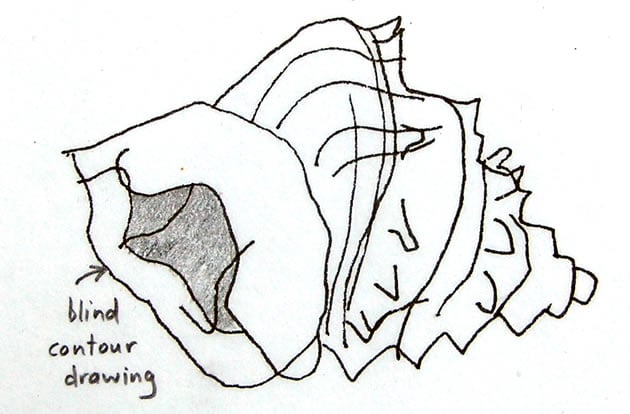
Blind Contour Cartoon
Definition: A blind contour drawing contains lines that are fatigued without ever looking at the piece of paper. This forces yous to report a scene closely, observing every shape and border with your eyes, equally your manus mimics these on paper. The aim is non to produce a realistic artwork, only rather to strengthen the connexion between eyes, hand and brain: a reminder that, when cartoon, you must starting time learn to run into.
Blind Cartoon Exercises: Blind cartoon is an excellent way to offset a high schoolhouse Art programme. Drawing wobbly lines that behave little resemblance to the called object is relaxing and stress-gratuitous. Oftentimes, a classroom bubbles with laughter at the unexpected results. Blind drawing stretches the arms and soul; eases y'all into observational drawing without fear.
Gesture Drawing / Timed Drawing / Movement Drawing
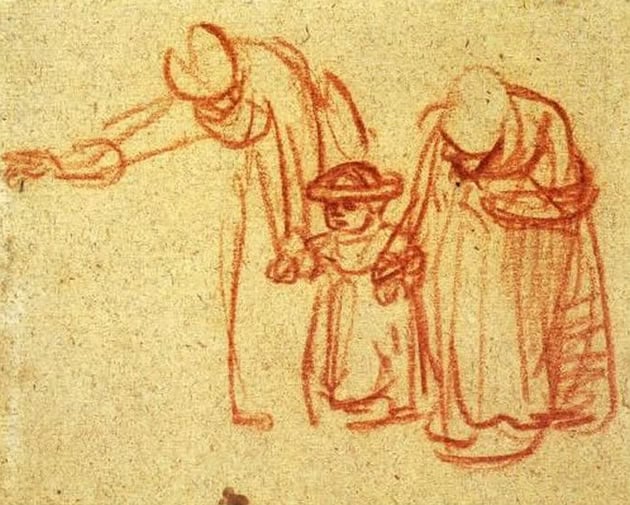
Definition: A gesture drawing is completed quickly – oft in short timed durations, such as 20, 30, threescore or 90 seconds – using fast, expressive lines. Gesture drawings capture bones forms and proportions – the emotion and essence of a field of study – without focusing on item. Due to their rapid completion, they are a bang-up mode to tape movement and activeness, as well every bit increment your cartoon speed, confidence and intuitive marking-making skill. Gesture drawings are best completed with smooth, easily applied mediums (chunky graphite pencils, charcoal sticks, pastels, soft brushes dipped in Indian ink, for example), without the use of an eraser. They are oftentimes completed on big, cheap sheets of paper, where you can move your arm fluidly, be bold with marking-making, and non worry about mistakes. As with blind drawings, gesture cartoon is an ideal warm-up activity.
Gesture Drawing Exercises: When you brainstorm investigating your subject matter in the initial phase of a high school Art program, it can be helpful to make several first-hand gestural drawings. The best of these tin be selected for your final portfolio (taking advantage of a photocopier or digital camera to reduce in size, if necessary). A small still life scene tin can exist depicted merely every bit hands as a big moving form.
A gesture drawing by Rembrandt Harmenszoon van Rijn:
A gestural figure drawing by Chelsea Stebar:

Continuous Line Drawing
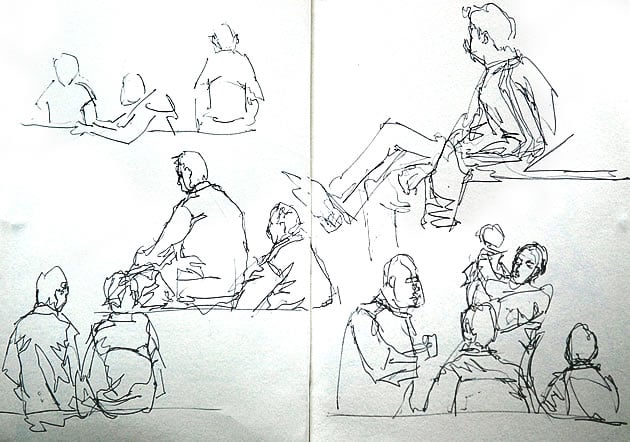
Definition: A continuous line cartoon is produced without ever lifting the drawing instrument from the folio. This means that, in addition to outlines and internal shapes, the pencil must move dorsum and forth across the surface of the paper, with lines doubling back on each other, then that the cartoon is ane free-flowing, unbroken line. To avert the temptation to erase lines, information technology can be helpful to complete a continuous line drawing with an ink pen, varying the line weight, as needed, to indicate perspective and areas of lite and shadow. Like the drawing methods described to a higher place, this drawing method develops confidence and cartoon speed, and encourages your eyes and hand and brain to work together. Continuous line drawings work best with in-depth observation of your subject, without interference from your thinking mind. According to Smithsonian Studio Arts:
…continuous line drawing is actually a very powerful mode to create a piece that is both hard edged and fluid, representational and abstract, rational and emotional all in one.
Continuous Line Cartoon Exercises: This drawing method is nifty for sketchbooks and cartoon from life. Information technology can be an excellent starter activity, with drawings completed on large, inexpensive newspaper that can be scanned / edited / cropped and used in other ways within your projects.
An A Level Fine art sketchbook page by Lucy Feng from Hereford Sixth Form College, Herefordshire, UK:
Profile drawing
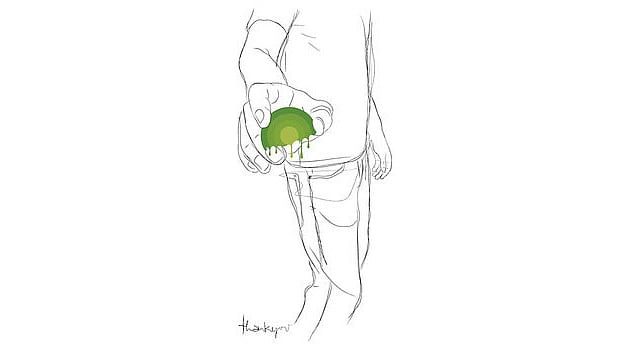
Definition: A contour drawing shows the outlines, shapes and edges of a scene, but omits fine detail, surface texture, colour and tone ('contour' is French for 'outline'). According to Wikipedia:
The purpose of contour drawing is to emphasize the mass and volume of the subject rather than the particular; the focus is on the outlined shape of the subject and non the minor details.
The illusion of three-dimensional form, infinite and distance tin can be conveyed in a profile cartoon through the utilize of varied line-weight (darker lines in the foreground / paler lines in the distance) and perspective.
Contour Drawing Exercises: Using line lonely eliminates the claiming of applying tone, colour and mediums; and instead focuses attention solely upon shape and proportion. After completing warm-upward activities such as blind and gesture drawings, slower, more formal contour drawings can be an excellent way to brainstorm more realistic representations of your field of study matter. Used intermittently throughout projects, contour drawings can as well be helpful for the student who needs to work faster.
A contour drawing by Ultima Thule:
Cross contour drawing
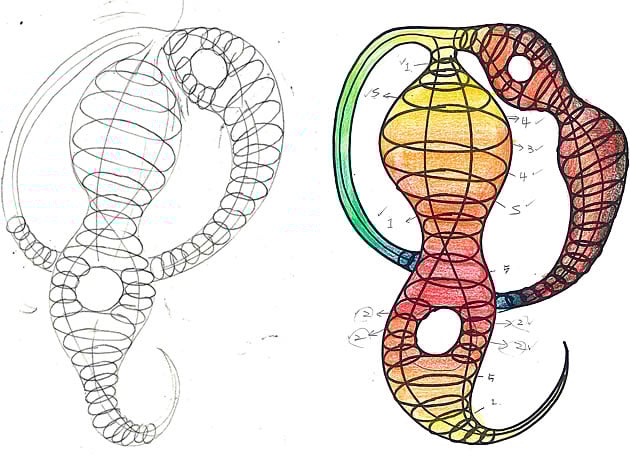
Definition: A cross profile cartoon contains parallel lines that run across the surface of an object (or radiate from a central bespeak), such every bit those that announced on a topographical map or a digital wireframe. The lines tin run at any appropriate angle (sometimes at multiple angles) and may continue across objects and into the groundwork. Cantankerous contour drawings typically follow the rules of perspective, with lines drawn closer together in the altitude and further apart in the foreground. In this blazon of drawing, the illusion of iii-dimensional volume is created entirely with line.
Cantankerous Contour Drawing Exercises: This is an splendid manner to gain familiarity with the volumes and three-dimensional forms in your project, producing analytical cross contour drawings that are suitable for sketchbooks or early preparatory sheets.
Cross contour drawing of a shell by Matt Louscher:

Cross contour manus drawings by (from left) Mathew Young, Ryan Acks and Lea Dallaglio while studying at the San Jose Land Academy, Department of Art and Art History:

Cross contour drawings by Daniel Servin (left) and Alfred Manzano, completed while studying AP Studio Fine art at Mt Eden High School in Hayward, California, USA:

A wireframe contour drawing exercise past Year 9 pupil Seonmin Lee from ACG Parnell College, Auckland, New Zealand:
Planar analysis cartoon
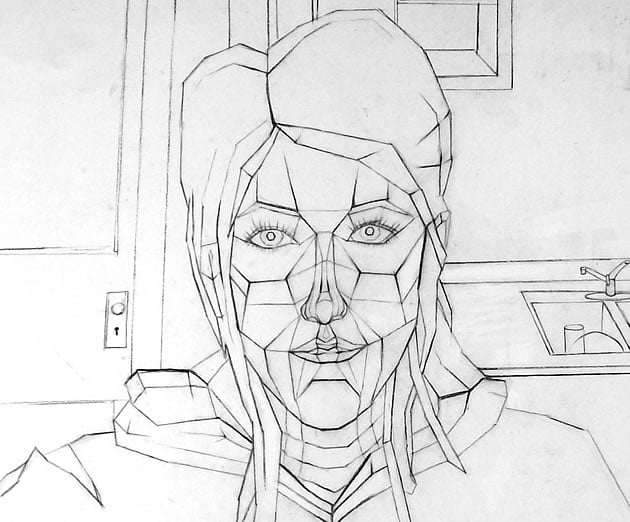
Definition: A planar analysis drawing simplifies complex curved surfaces into flat planes, using straight lines. This process helps students to think near the underlying construction of objects and results in an belittling drawing, that is rather mechanical in appearance.
Planar Assay Cartoon Activeness: This can be a great introductory cartoon exercise, especially if you are moving towards Cubism or abstracting scenes into geometric grade.
A planar analysis portrait completed by a student of Cat Normoyle:
Wire sculpture drawings
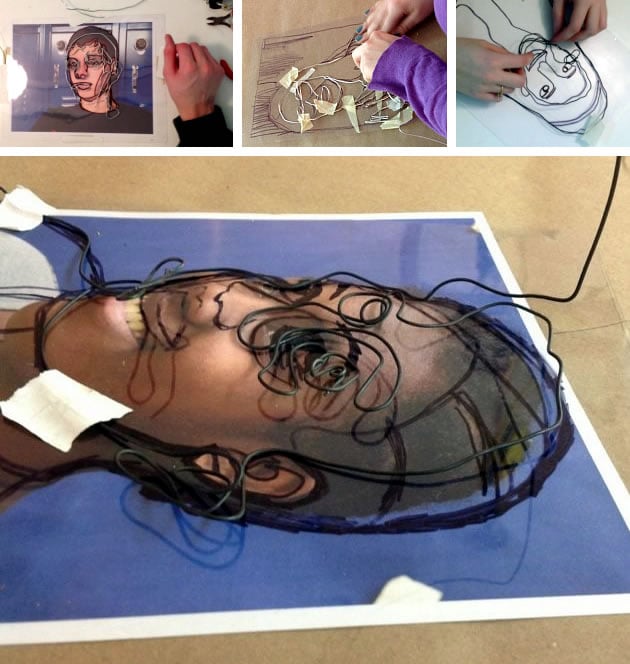
Definition: Wire can exist cut and bent into shapes with pliers to create iii-dimensional 'drawings', oftentimes resulting in a work filled with flowing, curved lines. These wire sculptures can exist attached to a two-dimensional frame or a flat surface, hung in the air, or be left free-standing, changing in appearance as a viewer moves around the room. Due to their flexible nature, wire sculptures oft move slightly in the wind, adding an extra interactive element to the piece of work.
Wire Sculpture Line Drawing Practise: This is an splendid activity for middle school students and for high school students, if information technology relates specifically to your project (and does non interfere with stamp requirements, for those who need to post work away for assessment). Pocket-size wire experiments, using light-weight wire, can too be mounted to sketchbook pages.
Wire sculptures completed by the students of Amy Bonner Oliveri from Allendale Columbia School, Rochester, New York, USA:
Hatching, cross hatching, and other line techniques
As well as representing contours, line can likewise exist used to use tone (calorie-free and shadow) to a drawing. This tin exist done by altering the:
- Gap betwixt the lines
- Lightness / darkness of the line
- Thickness of the line
There are many line techniques can exist used to create tone, equally illustrated in the worksheet below. Common techniques include:
- Small dashes
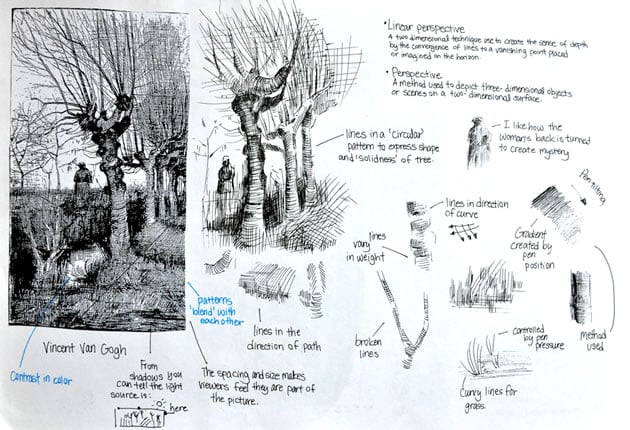
- Hatching (long, parallel lines on an angle)
- Cross-hatching (parallel lines at right angles)
- Stippling (dots)
- Scribbles
- Pocket-sized crosses
- Small circles
The angle that these techniques are applied may remain constant within a cartoon, or it may change in response to the bending and management of the forms. For case, cantankerous-hatching may menses around the surface of an object in a similar direction as cross contour lines. These techniques are as well a slap-up manner to create the illusion of texture (encounter our article nigh observational drawings).
Line Techniques Worksheet: The worksheet below has been provided by the Student Art Guide for classroom employ but and may exist issued freely to students (credited to studentartguide.com), as well as shared via the social media buttons at the lesser of this page. It may not be published online or shared or distributed in any other way, as per our terms and weather condition. The full size printable worksheet is available by clicking the PDF link below. This worksheet is suitable for middle school students, or senior students who have not had prior experience with line techniques.
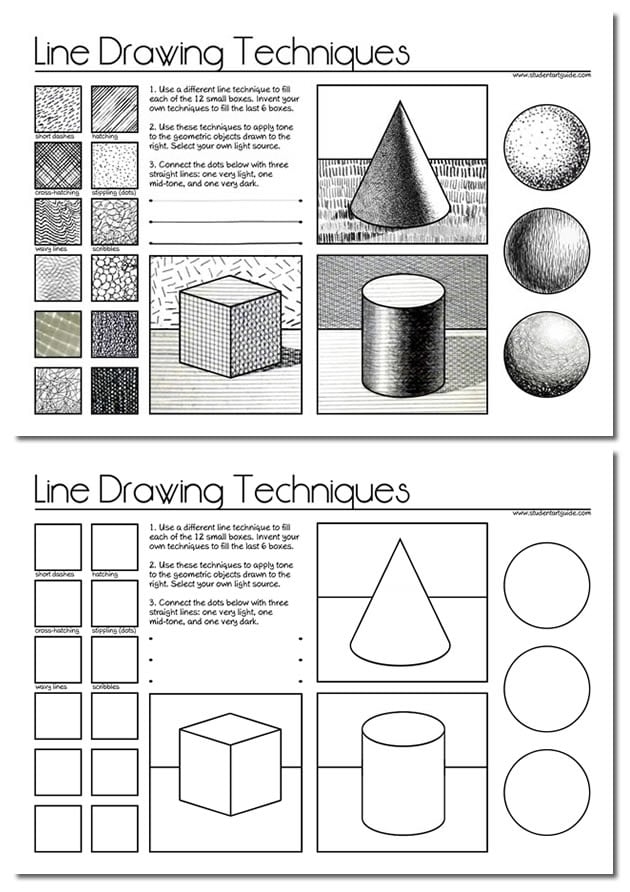
Click here to open the full size worksheet equally a printable PDF.
An Indian Ink however life cartoon by Kirana Intraroon, completed while in Year 10 at ACG Strathallan College, Auckland, New Zealand:

An A* GCSE Art sketchbook folio past Samantha Li:
A final GCSE Art piece by Hannah Armstrong:

Artist line drawings
Here is a collection of line drawings from famous and less well known artists, to inspire loftier schoolhouse Art students and teachers. This section is continually updated. Savour!
Pablo Picasso:

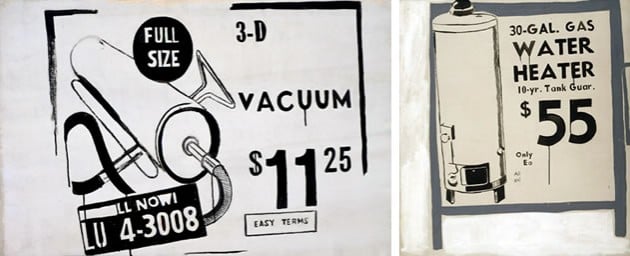
Andy Warhol:
David Hockney:

Vincent van Gogh:

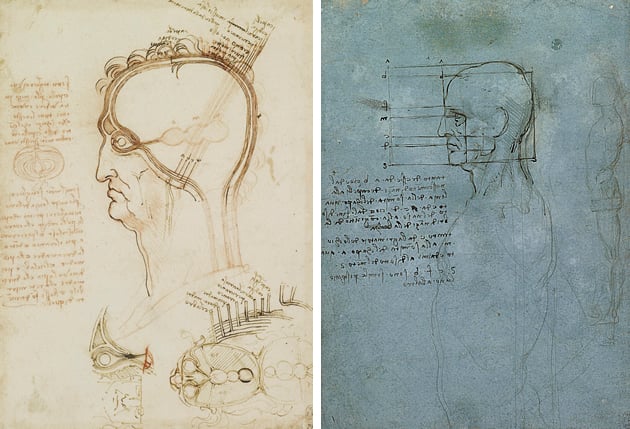
Leonardo da Vinci:
Aaron Earley:

Peter Root:

Maurizio Anzeri

Tornwing:

Karolina Cummings:

Daniel Mathers

Roz McQuillan:

Wang Tzu-Ting:

Nina Smart:
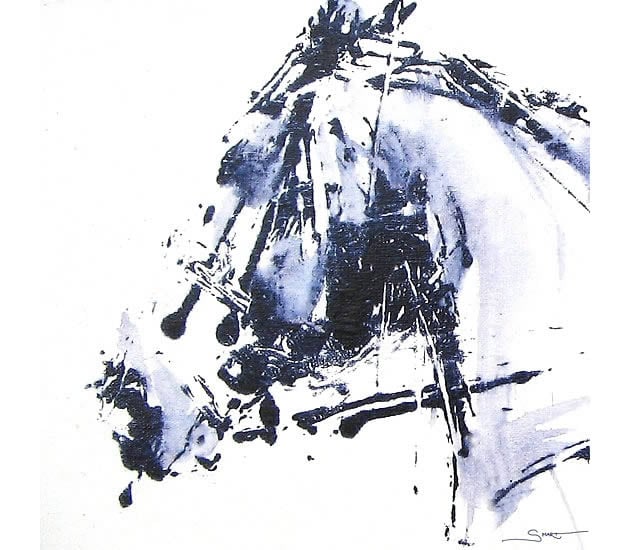
Andy Mercer:

Vital Photography:

Doug Bell

Matthew Dunn:

Rod McLaren:

Andreas Fischer:

Nicholas Weltyk:
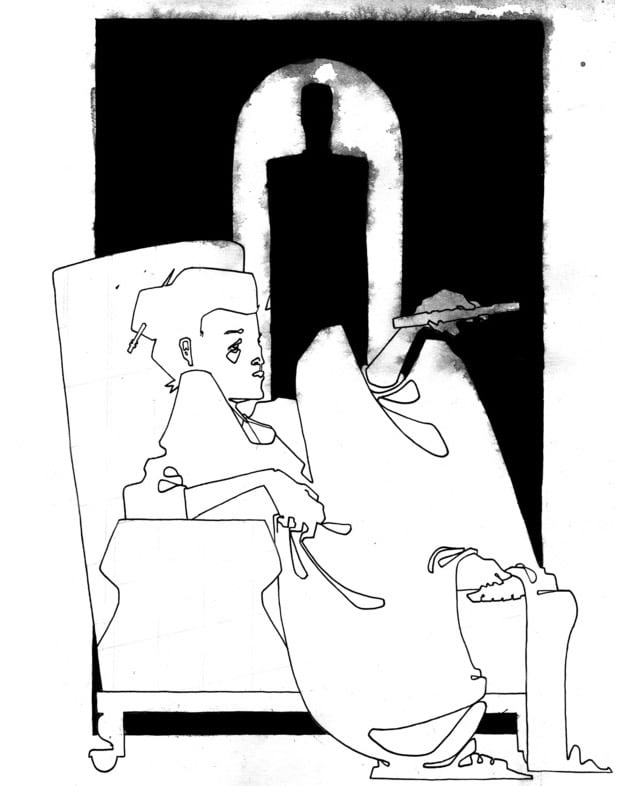
Swoon:

Liliana Porter:

Hong Chun Zhang:
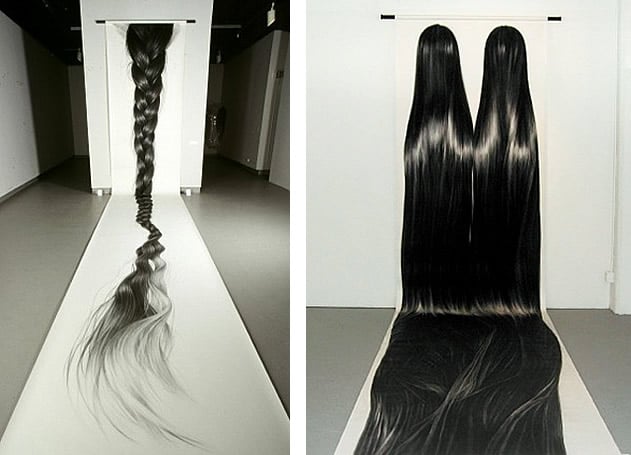
Bruce Pollock:

David Eskenazi

Matt Niebuhr:
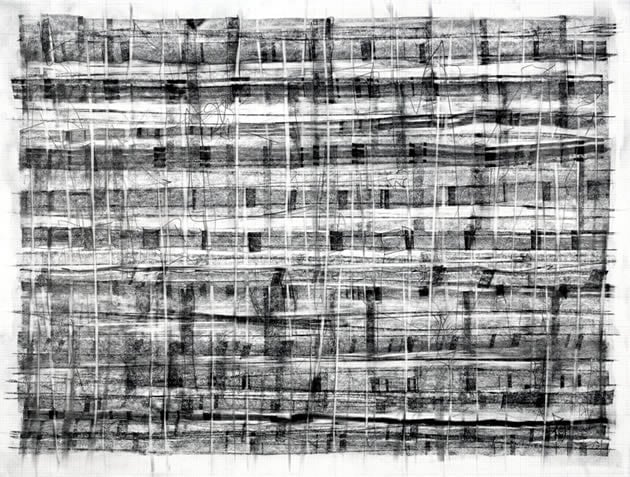
Albrecht Durer:

Il Lee:

Victoria Haven:

Carne Griffiths:
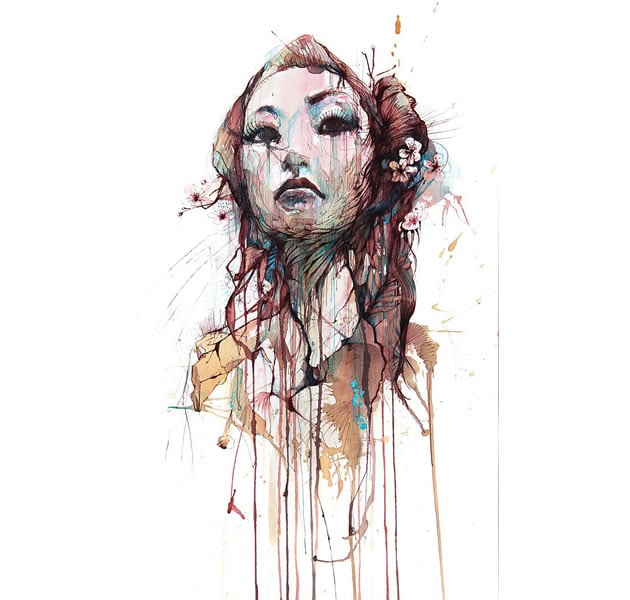
William Anastasi:

Charles Avery

Did you enjoy this article? You may wish to read 11 Tips for Producing an First-class Observational Drawing.

Amiria has been an Art & Design teacher and a Curriculum Co-ordinator for seven years, responsible for the course blueprint and assessment of student work in 2 high-achieving Auckland schools. She has a Available of Architectural Studies, Available of Architecture (Kickoff Form Honours) and a Graduate Diploma of Teaching. Amiria is a CIE Accredited Art & Design Coursework Assessor.
dunbarshimill1979.blogspot.com
Source: https://www.studentartguide.com/articles/line-drawings-2
0 Response to "Easy Art Drawings Paper 3d 2 Pices of Paper"
Post a Comment